
Over the years, start-ups are struggling more to garner funds as they pass the elementary stages of growth.

Facing a deepening slowdown, the auto sector is pinning hopes on the GST Council meeting on September 20 for a rate cut from 28 per cent to 18 per cent. However, states including Bihar, West Bengal, Kerala, and Punjab are of the view that the slowdown in the auto sector is not because of the GST rate but structural issues in the economy.
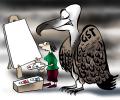
Experts said if the slowdown, and subsequent weakness in GST mobilisation, continued, it would curtail the Centre's resources to a considerable extent in the current financial year.

Changes in I-T rules kick in today; to help govt track taxpayers' income, reports Dilasha Seth.

The proposed move to withdraw the DDT would help encourage investments by addressing multiple taxation of income and bringing down the effective tax rate on companies, which is among the highest in the world.

DTC task force also favoured doing away with Dividend Distribution Tax by suggesting taxing dividends in the hands of shareholders.

The government is looking to plug loopholes in the Indian customs law provision that allows tax exemptions for gifts up to Rs 5,000 and trade samples up to Rs 10,000 sent to India from abroad.

The dichotomy between richer and poorer states is largely in consonance with the diversity in state level disease burden in the country.

Credit to priority sectors as well as small and medium industries will be discussed to find ways to accelerate economic growth.

Balakrishnan refused to react to the India Inc criticism of growing incidents of tax terrorism following Siddhartha's letter. Appearing unfazed, he said, "I only believe in doing my job well."

Maharashtra and Delhi lead the pack of states in terms of absolute number, with 142,425 and 125,937 closed companies, respectively.

Revenue foregone on account of corporation tax exemptions is estimated to grow by 16 per cent in 2018-19 (FY19) versus 8.7 per cent in the previous year and 12 per cent in 2016-17, show the Budget documents.
CBDT has been given a collection target of Rs 5.69 trillion in personal income tax in the fiscal year 2019-20 - 19.2 per cent more than the Rs 4.77-crore collection in the previous year.

To validate and continue using the existing PAN cards, citizens will have to link them to Aadhaar. Or else, they will be permitted to use Aadhaar instead for filing returns and while making other high-value transactions, specified under the Income Tax Act.
Nirmala Sitharaman has designed the revenue mix in such a way that while Centre's share in taxes would grow a massive 25 per cent, states' share would grow a dismal 6 per cent.

For insurance intermediaries like brokers, insurance repositories, third-party administrators, etc, 100 per cent FDI may be permitted.
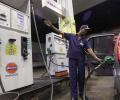
Consumption of petrol and diesel will contribute more than half of the Centre's exclusive share in GST in FY20, reports Abhishek Waghmare

A well-established tax system would have a predictable buoyancy - how fast the collections grow as a proportion to the growth of the economy. But that is not the case with GST. It is still undergoing substantial changes as the government responds to structural as well as administrative glitches.

The studies found that sectors with the highest unaccounted income included real estate, mining, pharmaceuticals, pan masala, gutkka and tobacco, bullion and commodity markets, film industry, educational institutes and professionals.

Sitharaman exhorted the states to work together with the Centre, stating that while the Union government sets the direction of economic growth, it is for the states to ensure effective implementation on the ground.
 © 2026 Rediff.com - Investor Information - Advertise with us - Disclaimer - Privacy Policy - Sitemap - Feedback - About us - Terms of use - Grievances